Metal Backgrounds with Polished Plates 1: A Designer's Industrial Asset
There's a specific kind of visual weight that only real metal can convey. It speaks of strength, precision, and a timeless, industrial elegance. In the digital space, capturing that authentic feel is a constant challenge. You need textures that don't just look like metal, but feel like it—complete with the subtle imperfections, the play of light, and the tangible surface quality. This is precisely where a resource like Metal Backgrounds with Polished Plates 1 proves its worth, offering a curated collection of textures that go beyond simple gradients and filters.
The Anatomy of a Premium Texture Pack
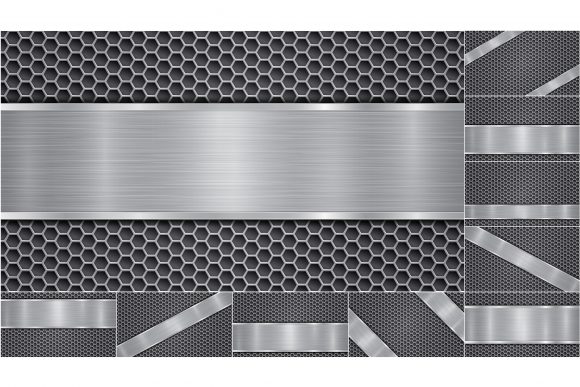
At its core, this pack presents 12 distinct abstract backgrounds, each built on a foundation of sophisticated metallic gray tones. The visual personality is a compelling duality. On one hand, you have the structured, engineered look of a metallic perforated surface with hexagonal holes. This pattern introduces rhythm and a modern, technical aesthetic. It’s the kind of texture you might see on high-end audio equipment, architectural facades, or the casing of a premium device.
On the other hand, the pack delivers the sleek, refined character of polished plates with metal texture. These backgrounds are defined by their glares and shiny edges, mimicking the way light dances across a brushed or mirror-finished steel surface. This combination allows for incredible versatility. One texture suggests a raw, industrial process, while the other implies a finished, luxurious product. Together, they form a complete toolkit for projects that demand a sense of quality and durability.
Where These Backgrounds Truly Shine
The real-world applications for this kind of design asset are extensive. For anyone in brand identity or logo design, these textures can serve as a powerful backdrop. Imagine a tech startup's logo presentation set against the hexagonal perforation—it immediately communicates innovation and structural integrity. A luxury watch brand or a high-end automotive company could use the polished plate variant to underscore themes of precision and flawless craftsmanship.
In editorial design and packaging design, these backgrounds solve the problem of creating visual interest without distracting from the core message. A magazine feature on architecture or engineering would feel grounded and authoritative with these textures. For product packaging, especially for items like tools, electronics, or premium spirits, a subtle metal background can elevate perceived value instantly. It moves a design from generic to specific, from cheap to considered.
The digital realm is another natural home. Web design elements like hero banners, section dividers, or featured content cards gain depth and sophistication. For social media graphics, where grabbing attention in a split second is crucial, a bold metallic texture can make a post stand out in a crowded feed. It’s particularly effective for announcements, product launches, or any content aiming to project confidence and permanence.
Practical Guidance for Implementation
Choosing to use a resource like Metal Backgrounds with Polished Plates 1 is the first step. Implementing it effectively is the next. A key strength of this pack is its file variety. The inclusion of vector files (.ai CC and .eps 10) means the hexagonal pattern can be scaled to any size without losing quality, perfect for large-format print or detailed digital work. The high-resolution raster JPGs (6667×3750 pixels at 16:9) are immediately ready for video projects, presentations, and web use.
When integrating these into a project, font pairing becomes a critical consideration. The strong visual personality of the metal textures demands typefaces that can hold their own. A clean, bold sans serif font often works beautifully, creating a modern, cohesive look. For a touch of contrast and elegance, pairing with a sophisticated serif font can work, provided the serif has a strong, confident weight. Avoid overly delicate script fonts or handwritten fonts unless you're going for a very specific, high-contrast juxtaposition, as they can get lost against the detailed background.
Always test your font pairing directly against the chosen background. Place your text and evaluate readability and visual hierarchy. The glares and patterns, while visually rich, must not compete with your core message. Sometimes, applying a slight dark overlay or using text with a solid background shape can ensure legibility while preserving the texture's impact.
From a brand perception standpoint, consistency is key. If you adopt one of these textures as part of your visual language, use it consistently across touchpoints to build recognition. The metallic quality inherently suggests a professional and established brand, one that values quality and attention to detail. This can significantly influence audience engagement, as people subconsciously associate such visual cues with reliability and excellence.
A Final Note on Licensing and Fit
Before diving in, always review the specific licensing terms. For most commercial font and asset packs, the license is designed to cover a wide range of uses, but it's your responsibility to confirm it aligns with your project—whether it's for a client, a personal blog, or a commercial product line. Evaluate the project's overall tone. Does "industrial," "technical," "premium," or "futuristic" align with the brand's core message? If the answer is yes, then a resource like Metal Backgrounds with Polished Plates 1 is more than just a background; it's a strategic tool that adds a layer of unspoken communication about the quality and nature of what you're presenting.