Stunning Japanese Folk Art Backgrounds: A Designer's Guide
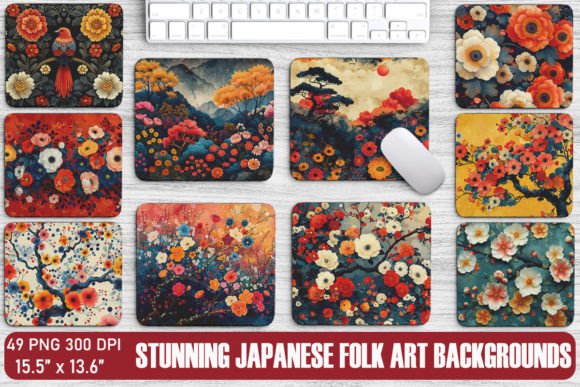
There's a particular quality to Japanese folk art that stops you in your tracks. It's not the refined minimalism of a Zen garden or the stark boldness of contemporary graphic design. Instead, it's something warmer, more textured, and deeply human. The Stunning Japanese Folk Art Backgrounds collection captures this essence perfectly, offering a suite of 49 high-resolution PNG files that bring authentic, handcrafted charm to any project. For designers, marketers, and creators, this isn't just another set of patterns—it's a versatile toolkit for injecting cultural depth and visual storytelling into your work.
The Visual Language: More Than Just Patterns
What makes these backgrounds stand out is their authentic folk art personality. You'll find motifs drawn from centuries of tradition: delicate floral arrangements reminiscent of kimono fabrics, bold geometric patterns inspired by textile weaving, and whimsical depictions of nature like waves, clouds, and animals. The color palettes are rich but balanced, often featuring deep indigos, earthy reds, warm golds, and crisp whites—colors that feel both timeless and surprisingly modern when applied correctly.
Unlike sterile digital patterns, these designs carry a subtle imperfection that speaks to their handmade origins. The lines aren't always perfectly straight; the textures have a tactile quality. This is what gives them their power. In a world saturated with slick, algorithm-generated graphics, these backgrounds offer authenticity. They communicate craftsmanship, tradition, and a respect for detail that audiences instinctively recognize and appreciate.
Strategic Applications for Modern Projects
Knowing where to use these assets is key to unlocking their potential. Their strength lies in projects where story and emotion are as important as information.
- Brand Identity & Packaging: For a artisanal tea brand, a boutique hotel, or a wellness product line, these backgrounds can form the foundation of a visual identity. Use a subtle floral pattern on business cards or a bolder geometric design on product packaging to instantly convey a sense of heritage and quality. The style pairs exceptionally well with both elegant serif fonts for a classic feel and clean sans-serif typefaces for a contemporary contrast.
- Editorial & Publishing Design: Bloggers, magazine editors, and book designers can use these patterns as section dividers, chapter title backgrounds, or sidebar accents. They add visual interest without overwhelming text, especially when used at reduced opacity or cropped to a small area. A travel blog featuring Japanese destinations could use these to create cohesive, immersive graphics.
- Digital & Social Media Graphics: The high resolution (300 DPI) and generous size (15.5 x 13.6 inches) make them perfect for creating standout social media banners, Instagram story backgrounds, or YouTube channel art. A marketing professional could use a wave pattern as a background for a quote graphic, instantly elevating it from generic to memorable. For web design, they work beautifully as hero section backgrounds or subtle website textures.
- Physical Products & Craft Projects: This is where the collection truly shines for hobbyists and small business owners. Print them on cardstock for unique invitations, use them in scrapbooking, or apply them to custom mouse pads, tote bags, or journal covers. The commercial license allows for this kind of physical product creation, opening up direct revenue opportunities.
Making It Work: Practical Design Guidance
Integrating a strong visual style like this requires thoughtful execution. Here’s how to ensure success.
Evaluate the Project Fit: First, ask if the folk art aesthetic aligns with your project's core message. It's ideal for themes of tradition, nature, craftsmanship, culture, and warmth. It might be less suitable for a cutting-edge tech startup or a minimalist Scandinavian furniture brand, unless used in a very restrained, illustrative way.
Master the Font Pairing: The background is your stage; the typography is your actor. For a harmonious look, pair these patterns with a clean, readable sans-serif font like Helvetica or Open Sans for body text. For headings, you can experiment. A elegant serif font like Playfair Display adds sophistication, while a simple script font can introduce a touch of personal flair. The key is contrast—let the busy background support, not fight, your text hierarchy.
Test for Readability and Hierarchy: Never place text directly on a busy pattern without testing. Use solid color overlays (a semi-transparent dark or light layer) behind text blocks to ensure legibility. The backgrounds are also perfect for creating visual hierarchy: use a full, vibrant pattern for your main hero area and a more muted, scaled-down version for secondary elements like footers or call-to-action buttons.
Leverage the Included Files: With 49 PNGs, you have a library, not a single asset. Don't use the same pattern for everything. Create a cohesive system by selecting 2-3 complementary designs from the set. Use one for primary branding, a simpler one for backgrounds, and a third for accents or icons. This builds brand consistency while keeping your visuals dynamic.
Resize with Confidence: The files are large, which is a significant advantage. You can scale them down for icons or scale them up for large-format printing like banners or posters without losing the crispness that defines a premium font or design asset. Always do a test print or screen preview at the final size to check for any visual artifacts.
In the end, the value of Stunning Japanese Folk Art Backgrounds lies in its ability to tell a story. It moves a design from being merely functional to being evocative. Whether you're building a brand identity, crafting a social media campaign, or creating a personal scrapbook, these assets provide a direct link to a rich artistic tradition, allowing you to create work that feels both intentional and inspired.